Rain in Fukuoka
is a scheduling note,
not a lost day.
This city built itself for weather: an underground shopping town, museums that cost ¥200, a digital forest and Japan's best ramen counters. Every wet-day option ranked, with prices and minutes.
A wet Fukuoka day ranks like this: teamLab Forest (~¥2,400/$16 — open, whatever the rumour says), then the ¥200 (~$1.35) museum trio led by the City Museum's gold seal, then Tenjin Chikagai — the 590 m underground arcade — with Canal City's indoor canal and a ramen counter as connective tissue. Rakusuien's covered tea room (¥100 + ¥500 matcha) is the quiet option. Two warnings: hard rain closes the yatai, so dinner becomes motsunabe; and June–July is tsuyu, when rain is the default, not the exception.
The wet-day list — best first
RankedteamLab Forest — the rain-proof headliner
A digital forest on the 5th floor of BOSS E・ZO by the PayPay Dome — and permanently open; the closure rumour belongs to a Tokyo museum. ~$15 on Klook with 60K+ bookings at 4.7. Families and couples both leave happy.
Fukuoka City Museum — the gold seal
A National Treasure gold seal from AD 57 — physical proof of Japan's first recorded contact with China — for the price of a vending-machine coffee. The best object in the city, in the driest building.
Tenjin Chikagai — the underground town
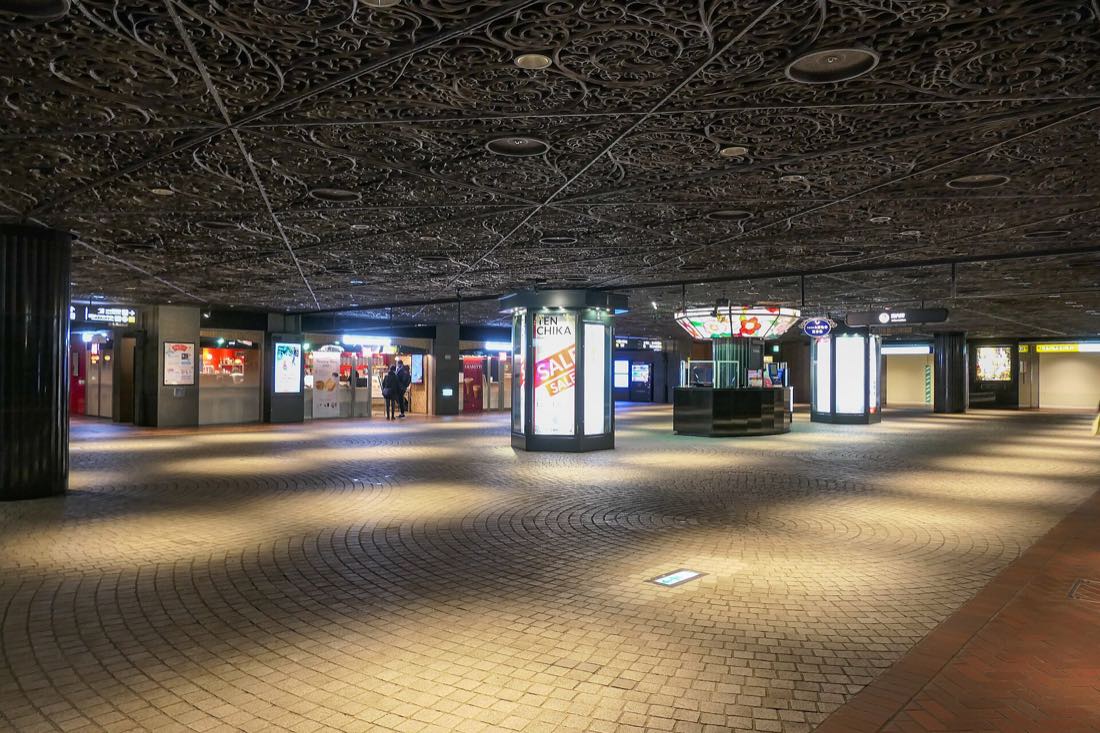
TripAdvisor's #4 Fukuoka attraction is an underground shopping street, and on a wet day the joke stops being funny: 590 m of 19th-century-styled arcade connecting Tenjin's stations, department stores and cafés without a drop falling on you.
Fukuoka Asian Art Museum — reopened April 2026
The only museum in the world dedicated to modern and contemporary Asian art, freshly reopened, connected to Nakasu-Kawabata Station with zero outdoor walking. The 7F Art Cafe — 10,000 books — is free even without a ticket.
Ramen — weather-independent by design
Rain is the best excuse for a two-ramen day. Ramen Stadium at Canal City reopened fully in April 2026 — eight counters under one roof — and the station's Deitos row never noticed the weather.
Canal City — the indoor canal earns its keep
A 3.1-rated mall on a dry day becomes a fair wet-day venue: the fountain-and-light show runs indoors on the half hour, Ramen Stadium is upstairs, and it links the old town to Nakasu under cover.
Rakusuien — tea while it rains on the garden
The covered tea room looks onto the pond garden, and rain improves the view. ¥100 in, ¥500 for matcha and a sweet, closed Tuesdays. The gentlest hour available in Hakata.
BOSS E・ZO — the rest of the fun building
Above teamLab: the renamed rooftop trio (すべZO tube slide, つりZO rail coaster, のぼZO climb — weather permitting for the rooftop bits) plus indoor floors. And if the Hawks are home, the Dome next door has a roof — baseball is Fukuoka's best rainy evening.
The temple circuit, umbrella edition
Drizzle actually flatters the temple district — wet stone, empty grounds, the hell walk already pitch dark. In real rain, skip it: the route is 3.5 km outdoors.
Anpanman Children's Museum — toddler insurance
Directly connected to Nakasu-Kawabata Station, and a genuinely excellent wet-day valve for small children — at a price, since adults pay full rate too. Above age 7 the magic collapses; the full verdict is on the kids page.
What rain actually changes in Fukuoka
The fine printThe yatai are the casualty: stalls don't trade through hard rain, and cold wet nights thin the rows to nothing. Don't fight it — this is the night for motsunabe or mizutaki, the city's two hotpots, and from November to February that's a trade up. The restaurant shortlist is in what to eat; if your heart was set on the stalls, the yatai guide explains how to read a doubtful evening.
Know your season, too: June and July are tsuyu — the rainy season — at 250–300 mm a month, and Kyushu takes rain seriously; treat a heavy-rain emergency warning as a stop-everything signal, not local colour. October is the driest month. The full monthly table: best time to visit.
teamLab Forest Fukuoka is open — permanently, on the 5th floor of BOSS E・ZO by the PayPay Dome. The persistent rumour that it closed comes from a different museum: teamLab Borderless in Odaiba, Tokyo, which shut in 2022 and later reopened elsewhere. Fukuoka's never closed.
Wet-day tickets, sorted
Book the dry stuffRainy Fukuoka, answered
FAQPage schema pairedIs Fukuoka good in the rain?
Unusually good — better than almost any Japanese city its size. The centre is laced with underground arcades and station-connected buildings, its three best museums cost about ¥200 (~$1.35) each, and its signature food is eaten at counters indoors. The one real loss is the yatai, which close in hard rain.
What's the single best rainy-day activity?
teamLab Forest if you haven't been — ~¥2,400 (~$16) at the door, ~$15 on Klook, 60–90 minutes, and it's permanently open despite the persistent closure rumour, which belongs to a different museum in Tokyo. If you have been, the City Museum's gold seal at ¥200 is the best object-per-yen in Japan.
Do the yatai open in the rain?
Light drizzle, usually — awnings exist. Hard rain or typhoon weather, no: stalls simply don't set up, and multiple travellers report arriving on a wet or cold night to a near-empty row. Have a motsunabe restaurant as the standing fallback and the evening loses nothing.
What about a rainy day with kids?
Strong hand: teamLab, the aquarium-scale shark tank at Marine World (worth the trip out even in rain — it's all indoors), the Anpanman museum for the under-7s, and a roofed Hawks game if the fixture list cooperates. The full family ranking: Fukuoka with kids.
When is Fukuoka's rainy season?
Tsuyu runs June into July — July is the wettest month at around 300 mm — and August–September adds typhoon risk, which cancels ferries first, then flights. October is the driest, calmest month of the year. Month-by-month verdicts: best time to visit.
Does rain ruin a 2-day itinerary?
No — reorder it. The 2-day plan's city day tolerates drizzle and its museums-and-teamLab pieces slot into whichever day is wetter; Dazaifu is the piece to protect, since its charm is outdoors. The reshuffling logic is in the 2-day plan.